Reduce Vehicle Cost and Expand Revenue Opportunities
Sonatus delivers software components for commercial vehicles to evolve into flexible, upgradable, and intelligent platforms.
For OEMs

Reduce Cost
Build a flexible E/E architecture that supports diverse vehicle requirements and deliver tailored features efficiently.

Expand Revenue
Boost after-sales revenue with a range of digital services and business applications to enhance transportation and logistics operations.
For Fleet Customers
Increase Efficiency
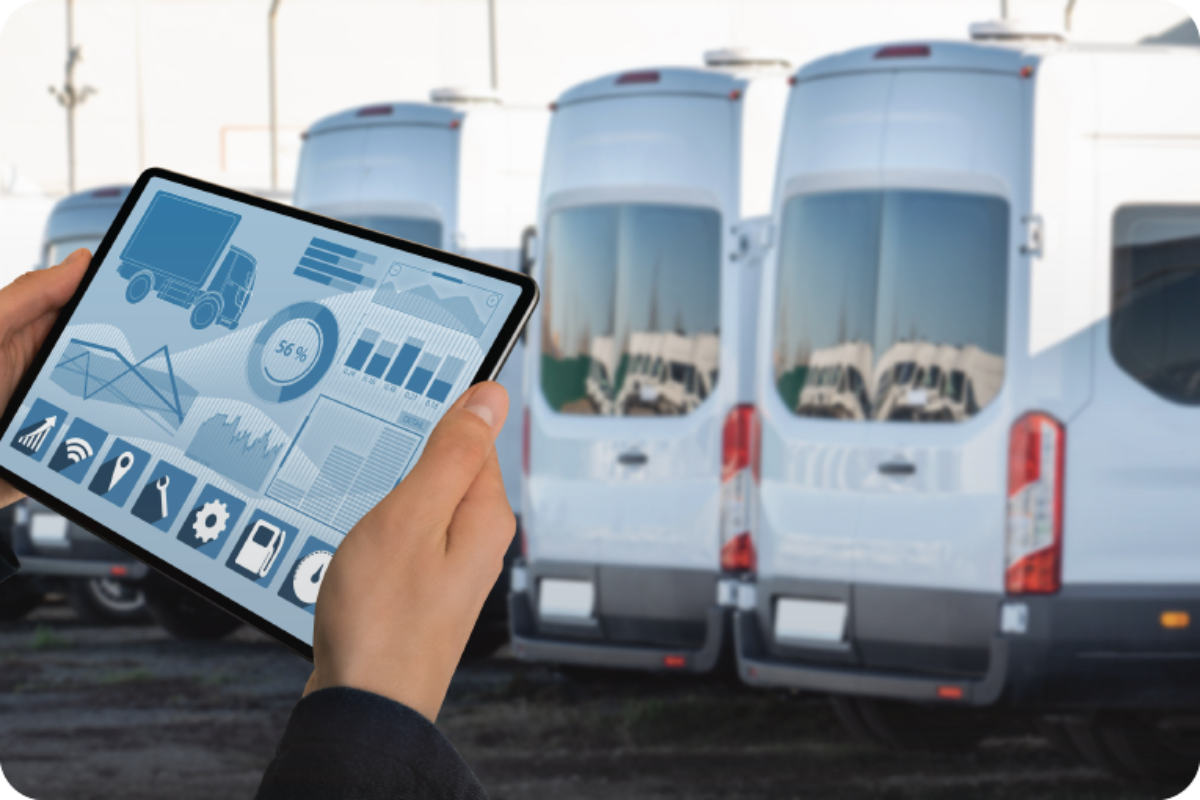
Optimize fleet operations with vital vehicle data and insights for improved fuel savings, asset utilization, and predictive maintenance.

Improve Compliance
Automate driving data logging for regulatory compliance and improve safe driving practices.
Commercial Overview
Empower OEMs and fleets with intelligent diagnostics, automated troubleshooting, and guided repair workflows to reduce downtime, lower costs, and improve service outcomes across the vehicle lifecycle
For OEMs: Lower development and lifecycle costs with intelligent Pre-SOP testing and validation
- Detect and diagnose issues earlier, including during end-of-line and early field operation
- Identify root causes faster to reduce warranty claim volume and expense
- Enable engineering teams with precise vehicle data and guided troubleshooting
- Continuously improve quality using insights from field performance
For Fleets: Lower service and repair costs
- Automatically detect, diagnose, and prioritize vehicle issues in real time
- Provide step-by-step, AI-guided repair recommendations for technicians
- Continuously monitor vehicle health using live and historical data
- Enable natural language interaction for faster troubleshooting and insights
Run AI models and workloads on-vehicle to continuously monitor vehicle health and enable intelligent data-driven decisions
- Monitor vehicle health and detect early signs of component wear, degradation, or failure
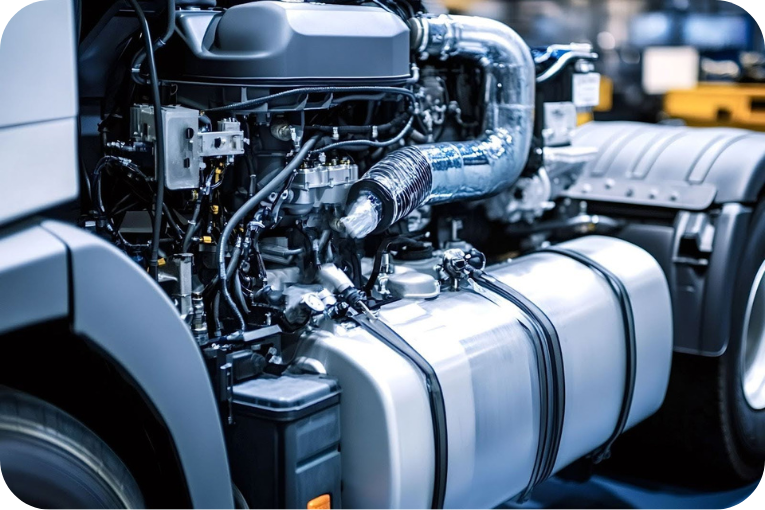
- Enhance smart diagnostics for vehicle systems like electrical, powertrain, or aftertreatment
- Deploy advanced features and avoid new hardware costs with sensor virtualization
- Implement intelligent data collection for more robust troubleshooting and diagnostics
Enhance Vehicle Intelligence
Streamline vehicle performance and software-defined features with edge-based AI models that continuously monitor vehicle health for proactive, condition-based maintenance.
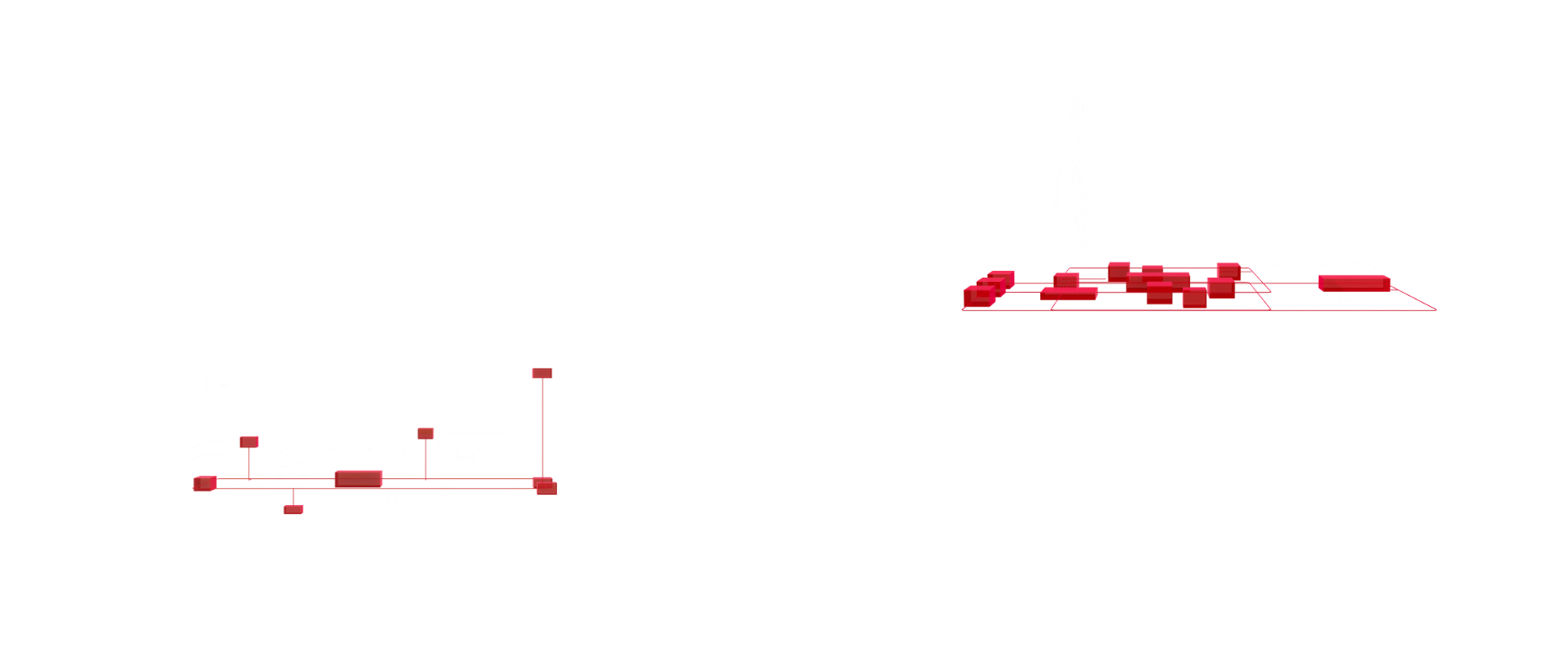
Modular SDV architecture decoupling software and hardware for ultimate flexibility
- Build a flexible E/E architecture that decouples SW and HW for faster innovation.
- Achieve a scalable platform for diverse commercial vehicle configurations.
- Enhance feature extensibility with a service-oriented architecture.
Reduce Cost
Lower vehicle BOM costs by consolidating electronic control units (ECUs), minimizing wiring, and implementing simplified E/E architectures that span traditional haulage to vocational segments.
Gather high-value vehicle data for enabling fine-grained diagnostics and performance insights
- Dynamically manage vehicle data through fine-grained and lightweight policies.
- Define triggers and events to capture precise data across high-level protocols like J1939.
- Harness the power of AI and natural language to simplify data collection.
Expand Revenue
Enable a myriad of services for commercial vehicles, including function validation, feature planning, and predictive maintenance, to detect early signs of component failure and avoid costly downtime.
Enables real-time rule creation and automation across vehicle systems
- Build sophisticated automation workflows based on vehicle type, ECU events, or specific operational scenarios.
- Quickly create in-vehicle if-this-then-that workflows and logic using an intuitive GenAI-powered interface.
- Orchestrate vehicle-wide actions across CAN, Ethernet, and J1939 ECUs.
Increase Efficiency
Automate vehicle functions like diagnostic routines and in-cab personalization, or dynamically optimize engine fuel maps based on load weight, terrain, traffic conditions, or driving behavior.
Securely manages and deploys xOTA updates at scale with minimal vehicle downtime
- Conduct cloud-based dry runs to predict campaign performance, reduce costs, and improve success rates.
- Manage vehicle-wide firmware, application, container, variant coding, and policy updates from a single interface.
Improve Compliance
Enable fleet operational efficiency with continuously optimized and up-to-date systems, including timely updates to engine control software to meet emissions standards such as CARB Compliance and the EU’s CO2 standard.
How Sonatus enables commercial vehicles with a software-defined data platform

Discover how Hyundai partnered with Sonatus to create a software-defined infrastructure for the efficient development of next-gen commercial vehicles and was able to:
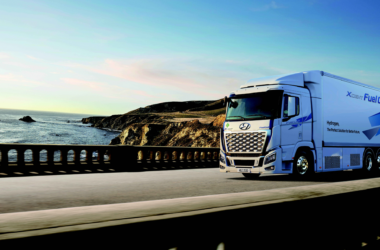
- Launch the XCIENT Fuel Cell Truck and ELEC CITY Bus on time without system redesigns.
- Reduce design time and cost by reusing network architecture across vehicle lines.
- Enable advanced diagnostics, maintenance, and connected services.
The Future of Commercial Vehicles is Software-Defined

Commercial Vehicle Use Cases
Deliver new commercial vehicle applications and fleet services
Sonatus empowers commercial vehicle manufacturers to meet the growing demands of diverse transportation and mobility use cases. Our advanced solutions drive the development of more efficient, maintainable, and adaptable vehicles, equipped with connected fleet services that enhance operational efficiency.
Explore our use cases to learn how Sonatus is transforming commercial fleets, making them easier to manage, maintain, and optimize for today’s dynamic transportation needs.
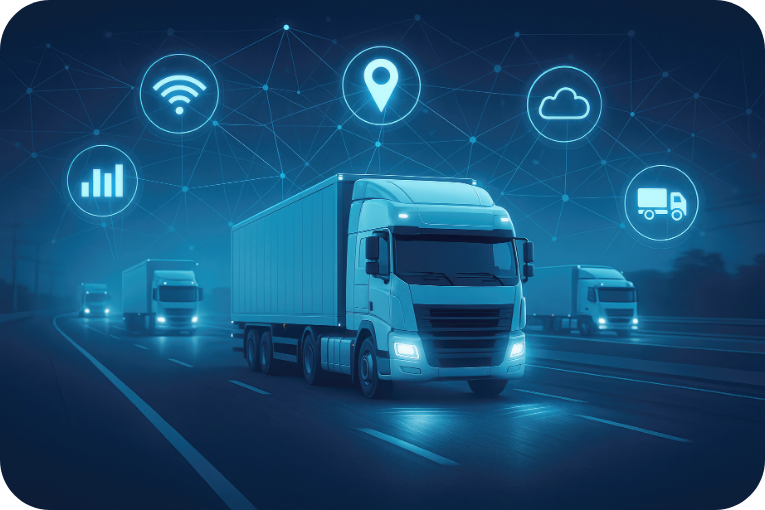

Streamline Commercial Vehicle Data Collection with Generative AI
For commercial vehicle OEMs, enabling the collection of vehicle data access is critical for supporting their vehicle platforms throughout their lifecycle. Additionally, robust data collection policies to help fleets are essential for optimizing uptime and minimizing maintenance costs.

Frequently asked questions
Related resources
Sonatus Technology Reaches Commercial Vehicle Production Milestone
How Software-Defined Vehicle (SDV) Technology Can Empower Commercial Vehicle Manufacturers
Driving the Future of Commercial Transportation: Sonatus at ACT Expo 2025