Unleash the power of in-vehicle AI
AI Director empowers OEMs to bring intelligent, adaptive vehicles to market faster and at lower costs by streamlining in-vehicle AI development, deployment, and management.

Accelerate Model Deployment
Unify fragmented workflows, enabling fast, automated AI model deployment into vehicles across teams, tools, and compute platforms
- Streamlines the end-to-end AI lifecycle: data → model → deployment → feedback
- Reduces time-to-market for AI features
- Scales model deployment across multiple vehicle lines and domains
- Lowers engineering overhead for integration and validation

Maximize Hardware Efficiency
Optimize models for different types of vehicle compute, ensuring efficient, high-performance execution across ECUs without overprovisioning.
- Ensures models are optimized for target ECUs
- Supports diverse silicon vendors without rewriting models
- Leverages silicon-specific acceleration (CPUs, GPUs, NPUs)
- Minimizes compute, power, and thermal footprint

Scale AI Workstreams
Standardize integration and data access, enabling consistent deployment of AI models across OEMs, suppliers, and vehicle platforms.
- Common runtime and deployment interface for all model vendors
- Abstracts vehicle data and system differences
- Connects models to the right vehicle signals seamlessly
- Reduces per-model integration cost and complexity
- Streamlines collaboration between OEMs, Tier 1s, cloud and IP vendors
Deliver In-Vehicle Edge AI at Scale
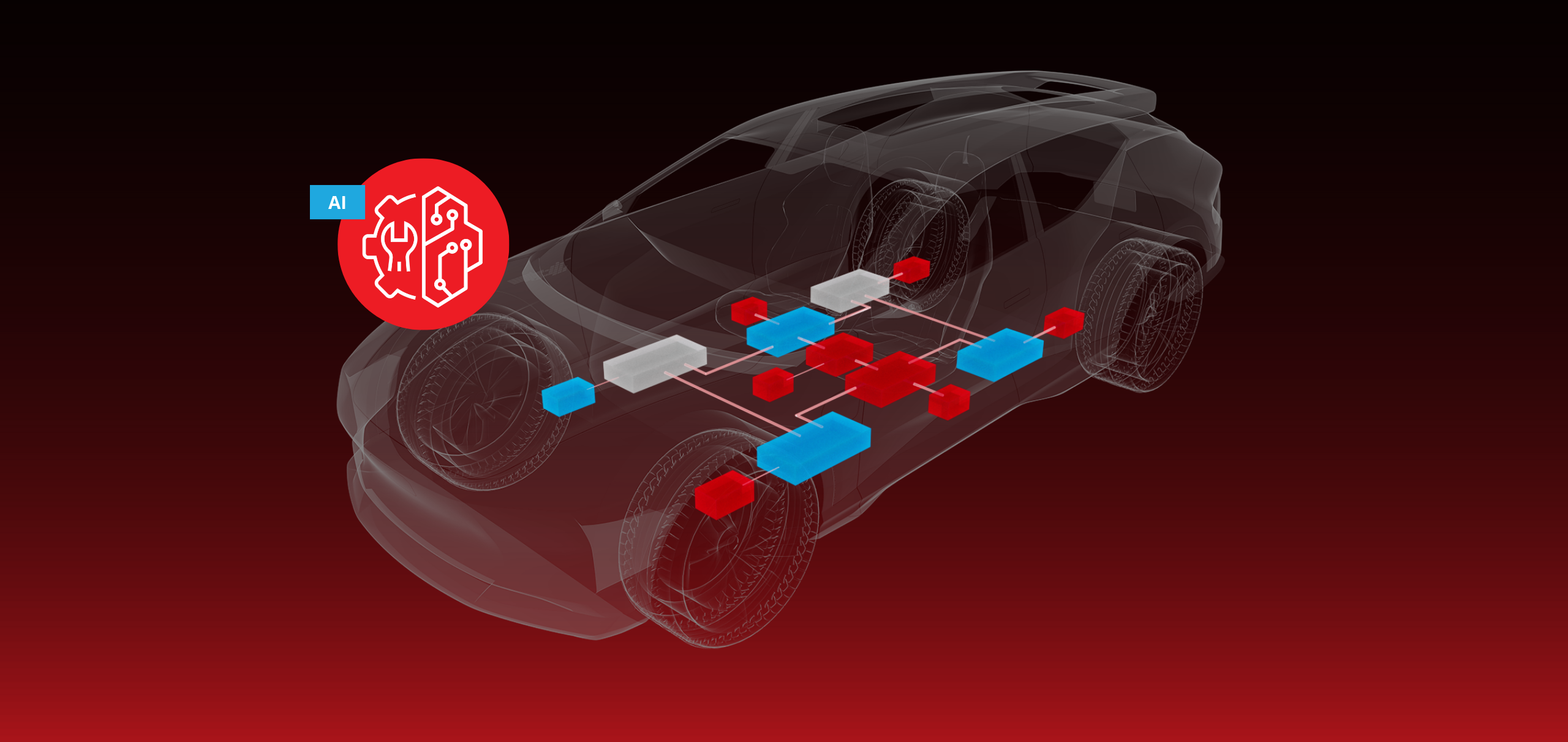
Accelerate, scale, and simplify AI deployment across vehicle platforms with Sonatus AI Director.
- Market Context: Why the shift to in-vehicle edge AI
- AI Director Overview: A unified platform for the complete AI lifecycle
- Deployment Challenges Solved: How Sonatus addresses integration, scalability, and data access hurdles
Features
AI Director is an end-to-end toolchain for deploying, managing, and scaling AI workloads at the vehicle edge. Purpose-built for the unique constraints and opportunities of the automotive environment, it unifies the AI lifecycle—from model training to real-time inference—with streamlined tools for integration, optimization, and monitoring.
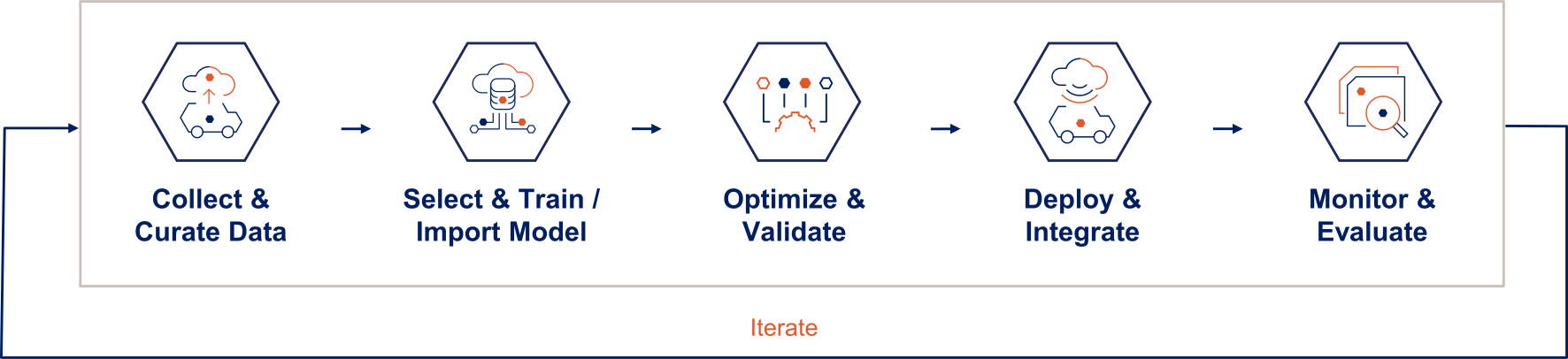
Model Deployment
- Unified toolchain and runtime for model optimization and deployment
- Integration with vehicle ECUs and cloud platforms
- Integration with vehicle-wide data sources
- Built-in support for automotive MLOps and data feedback loops
Hardware Optimization
- Hardware-aware model optimization and tuning layer
- Runtime adapts to ECU capabilities and limitations
- Connectors for silicon vendor toolchains
- Resource-aware model execution options
Unified Workstreams
- Standardized APIs, data models, and runtime behavior
- Seamless integration with model-specific data sources
- Plugin-based architecture for diverse AI workloads
- Secure data access and governance controls
Sonatus AI Director: Partner Use Cases



Frequently asked questions
- AI Director streamlines the AI model lifecycle management, reducing operational inefficiencies.
- AI Director enables AI to run on existing compute, maximizing the existing investment in vehicle hardware.
- It provides a common framework to integrate models from multiple providers and across vehicle platforms
- In-vehicle AI enables optimization for components and operations not possible with today’s algorithms
Related resources
Sonatus AI Director Unveiled to Power In-Vehicle Edge AI at Scale
The Next Revolution in Automotive: In-Vehicle Edge AI
Unleash the Power of In-Vehicle AI with Sonatus AI Director