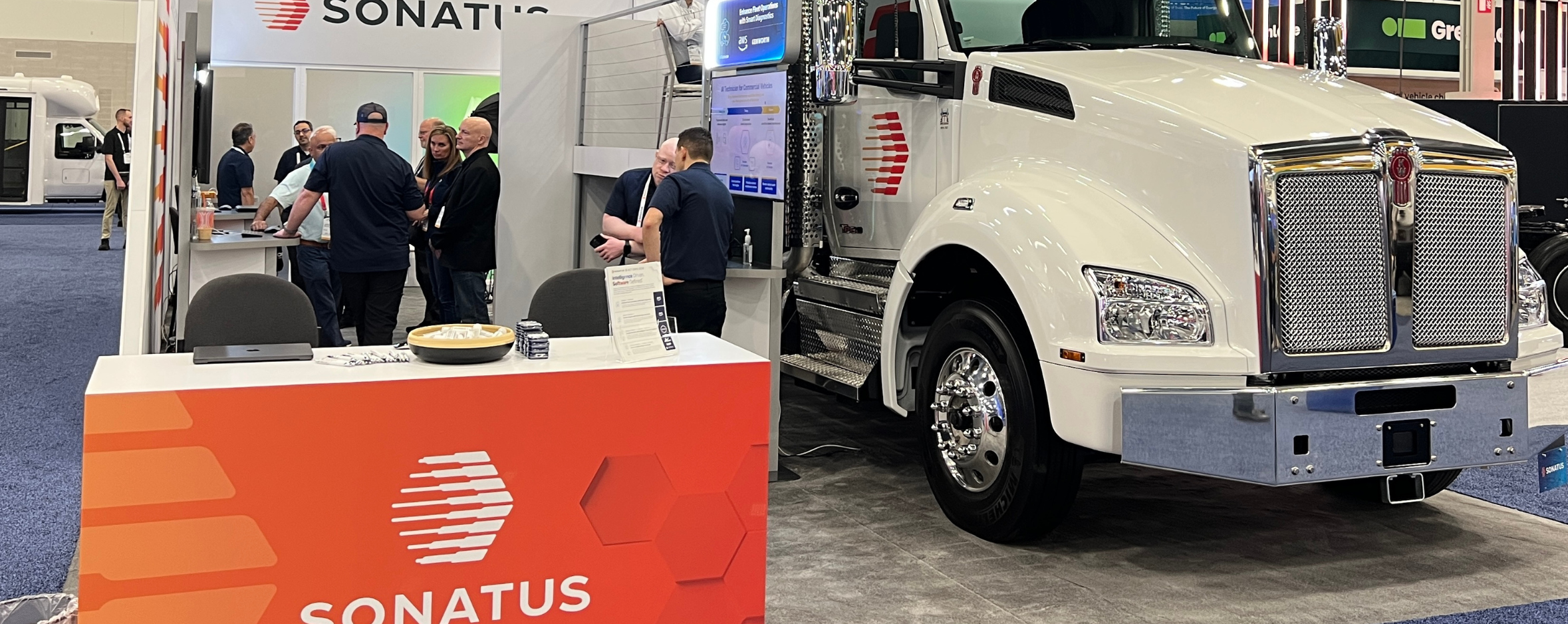
Navigate a new era of commercial vehicle development
Commercial vehicle manufacturers have always operated under a different set of engineering realities than their passenger vehicle counterparts. A single vehicle platform may support regional delivery, long-haul transportation, construction, municipal services, or passenger transit, each with its own duty cycles, payloads, operating environments, and customer expectations. That diversity creates complexity throughout the vehicle lifecycle.
Engineering teams must validate vehicles across countless combinations of loads, terrain, weather, upfit configurations, and operating conditions. Manufacturing crews are expected to launch increasingly intelligent vehicles without compromising quality. Service teams must quickly perform vehicle diagnostics on sophisticated software and electrical systems while minimizing warranty costs and helping fleet customers maximize uptime.
Software-defined vehicle (SDV) architectures have helped commercial OEMs address many of these challenges. Modern E/E architectures, centralized computing, and over-the-air software updates have made it possible to build more flexible vehicle platforms, standardize software across vehicle lines, and continue improving vehicles long after they leave the factory. As commercial vehicles become increasingly connected and evolve into AI-defined vehicles, they also create new opportunities to improve how they are engineered, built, and operated.
Today’s vehicles generate enormous amounts of operational data, but much of its value remains locked inside disconnected engineering workflows. The manufacturers that gain the next competitive advantage won’t simply collect more vehicle data, they will transform that data into intelligence that improves how vehicles are engineered, validated, produced, and serviced.
Turn operational data into engineering intelligence
Every commercial vehicle generates a continuous stream of information. Vehicle networks, sensors, ECUs, diagnostic systems, and connected services capture valuable insight into how vehicles perform under real-world operating conditions. The challenge isn’t collecting information. The challenge is understanding what that information means and using it to make better engineering decisions.
Imagine a vehicle encounters an intermittent braking issue while operating under a heavy payload on a steep grade. Traditional workflows require engineers to gather logs, reproduce the event, correlate signals across multiple systems, and manually investigate possible root causes. Days, weeks, and possibly months pass before the underlying issue is fully understood.
Vehicle AI changes that workflow. By combining operational data with engineering specifications, diagnostic information, historical service records, and institutional knowledge, AI can help engineering teams identify likely root causes, recommend additional investigations, and uncover patterns that would otherwise remain hidden.
More importantly, those insights don’t remain confined to a single investigation. They can improve validation, inform production software, enhance diagnostics, and strengthen future vehicle programs. Vehicle AI transforms operational data into continuous engineering intelligence.
Improve every stage of the vehicle lifecycle with Fastlane
Turning vehicle AI into operational value requires more than a standalone AI application. Commercial OEMs need a vehicle data platform that connects data, AI reasoning, and in-vehicle intelligence into a continuous closed-loop system that supports development, production, and after-sales service.
The Sonatus® Fastlane™ Platform, a vehicle AI platform, was built to do exactly that.
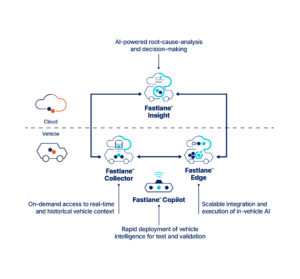
Fastlane brings together four integrated products that work independently, but even more powerfully together to help commercial vehicle manufacturers operationalize Vehicle AI across the complete vehicle lifecycle.
Fastlane™ Collector dynamically captures the precise vehicle signals, diagnostics, logs, and operating context needed to understand complex events while minimizing unnecessary vehicle data collection.
Fastlane™ Insight applies agentic AI reasoning to combine telemetry, engineering specifications, service history, diagnostics, and institutional knowledge into actionable engineering and service intelligence.
Fastlane™ Edge deploys AI models, virtual sensors, predictive diagnostics, and intelligent software directly into production vehicles, enabling real-time decision making where vehicle data is generated.
Fastlane™ Copilot provides a turnkey hardware and software solution that enables OEMs and suppliers to begin validating Vehicle AI workflows within days and even late in a vehicle development program and without requiring extensive vehicle integration.
Together, these capabilities enable commercial OEMs to accelerate development, continuously improve production vehicles, and transform after-sales service through a unified approach with Vehicle AI.
Streamline test and validation
Validation has always been one of the most resource-intensive phases of commercial vehicle development. Unlike passenger vehicles, commercial platforms must perform reliably across diverse operating environments, payloads, climates, and customer applications. Prototype vehicles are expensive and limited in availability, making every hour of testing increasingly valuable. Fastlane helps engineering organizations make better use of every validation vehicle.
Fastlane Collector captures the operational context surrounding critical events instead of overwhelming engineering teams with continuous streams of raw data. Fastlane Insight then analyzes that information alongside engineering documentation, diagnostics, and historical investigations to accelerate root-cause analysis and recommend additional data collection when needed.
The result is a more efficient validation process that helps engineering teams identify issues sooner, resolve them faster, and move programs into production with greater confidence.
Deploy smarter production vehicles
Commercial vehicles operate in demanding environments where changing loads, driving conditions, component wear, and customer usage continuously influence vehicle performance. Embedded intelligence enables those vehicles to monitor conditions, identify anomalies, and continuously improve throughout their operational lives.
Fastlane Edge provides the execution environment for deploying AI models, virtual sensors, predictive diagnostics, and intelligent automation directly within production vehicles.
Running intelligence at the edge enables real-time decision making while reducing dependence on cloud connectivity. At the same time, fleet-wide learning enables manufacturers to continuously refine AI models and software capabilities, creating a feedback loop that improves both vehicles already on the road and future vehicle programs.
The result is a vehicle platform that becomes more capable over time rather than remaining static after production.
Transform after-sales service into a strategic advantage
Commercial vehicle manufacturers increasingly compete on the quality of the services they provide after a vehicle is delivered.
Warranty costs continue to rise as software complexity grows. Diagnosing interactions between electrical systems, embedded software, and mechanical components requires more than traditional diagnostic workflows. Fleet customers expect rapid issue resolution that minimizes vehicle downtime and keeps operations moving.
Fastlane Insight correlates telemetry, diagnostics, engineering documentation, and historical service information to identify likely root causes and recommend corrective actions. Fastlane Collector can retrieve targeted operational data from vehicles already in service, enabling remote vehicle diagnostics without requiring broad data collection campaigns.
These capabilities help OEMs improve diagnostic accuracy, reduce warranty costs, strengthen engineering feedback loops, and deliver preventive maintenance programs \that ultimately help fleet customers maximize vehicle availability.
Build the next generation of intelligent commercial vehicles
The commercial vehicle industry has spent the past decade building software-defined platforms capable of supporting increasingly connected and configurable vehicles.The next phase of innovation is about making those platforms intelligent.
Vehicle AI enables manufacturers to transform operational data into engineering knowledge, deploy intelligence directly into vehicles, and continuously improve products throughout their lifecycle. Rather than treating development, production, and service as separate functions, commercial OEMs can create a continuous cycle of learning that strengthens every new vehicle program while delivering greater value to the fleet customers they support.
The Sonatus Fastlane Platform brings together intelligent data collection, AI-powered reasoning, edge AI deployment, and rapid implementation in a unified platform designed specifically for commercial vehicles.
As commercial vehicle complexity continues to increase, the manufacturers that lead the next generation won’t simply build connected vehicles. They’ll build vehicles that continuously generate insight, improve with experience, and help every stage of the organization make smarter decisions.