
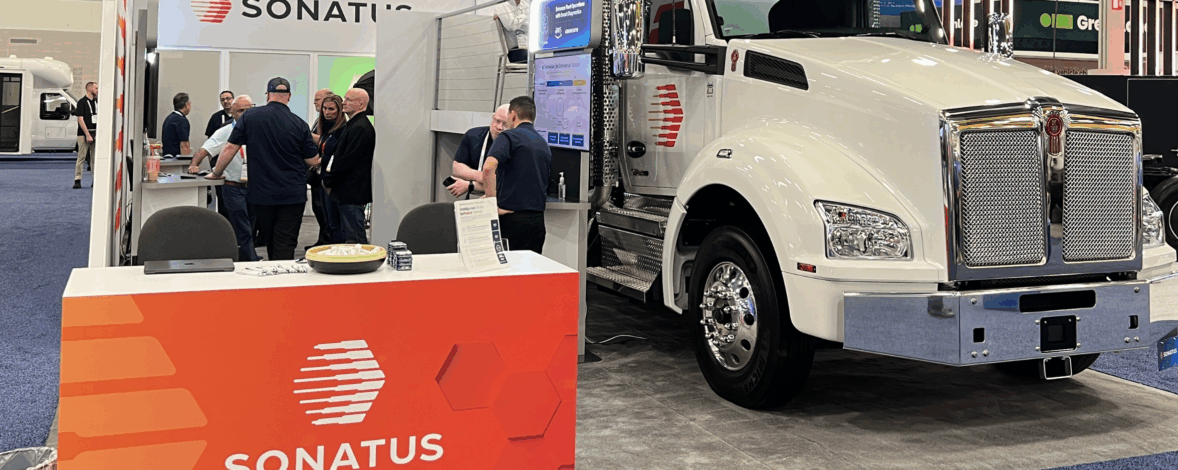
ACT Expo 2026 a clairement mis en évidence une chose : le secteur des véhicules utilitaires a dépassé le stade où l'on se demandait si l'AI e avait de l'importance. Désormais, l'ensemble de l'écosystème cherche à déterminer comment déployer l'AI e à grande échelle.
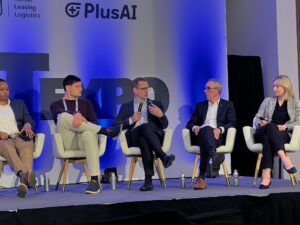
L'électrification et l'hydrogène ont fait la une, mais le véritable fil conducteur du salon de cette année était l'intégration opérationnelle AI intégrés aux diagnostics, le calcul en périphérie, les plateformes autonomes et les logiciels d’orchestration de flottes. Sonatus a participé à la table ronde sur les flottes organisée par l’ AI , au cours de laquelle notre directeur marketing, le Dr John Heinlein, s’est joint à des leaders du secteur pour décrypter la réalité du déploiement sur le terrain.
AI fait ses preuves
Les flottes ne se contentent plus de mener des expériences « d AI » : elles mesurent désormais les résultats. La maintenance prédictive a été au cœur des discussions. Brad Sutton, de Cummins, a indiqué que les diagnostics assistés par l’ AI avaient permis d’économiser près de 200 000 heures de main-d’œuvre en 18 mois, en orientant directement les techniciens vers les causes profondes des problèmes. Samantha Thompson, de Penske, l’a exprimé sans détour : « Tous les codes d’erreur ne se valent pas. » C’est l’intelligence contextuelle, et non le volume brut de données, qui fait la différence. Le message constant des intervenants : l’ AI e est un copilote, pas un substitut.
L'« edge computing » est le nouveau champ de bataille
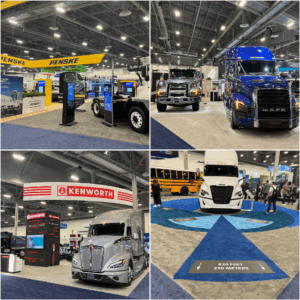
Tout envoyer dans le cloud n'est pas une option. La tendance est désormais d'exécuter des modèles d'AI s légers directement sur les plateformes informatiques des véhicules — en hiérarchisant et en filtrant les données localement avant même qu'elles ne quittent le véhicule. Comme l'a souligné le Dr Heinlein, l'approche gagnante consiste à « utiliser des modèles plus légers et à les optimiser en fonction de la puissance de calcul dont on dispose, plutôt que de celle dont on rêverait ».
Le transport routier autonome prend son essor
Cette année, les camions autonomes spécialement conçus à cet effet ressemblaient moins à des démonstrations de concepts qu’à des programmes de série. Plusieurs plateformes autonomes proposées par des équipementiers mettaient l’accent sur l’intégration des capteurs, la redondance et le déploiement évolutif, démontrant ainsi leur maturité opérationnelle plutôt que de se limiter à une simple vitrine de R&D.
Les logiciels de gestion de flotte deviennent une plateforme opérationnelle
Les processus de coaching des conducteurs et les services connectés destinés aux flottes ont tous deux mis en évidence la même évolution : les logiciels de gestion de flotte ne sont plus de simples outils de visibilité, mais véritables moteurs de prise de décision. Connectés en permanence. Exploitables. Assistés par l’ AI.
Tout devient gérable par logiciel
La philosophie du « software-defined » s'est étendue bien au-delà de la pile informatique centrale du véhicule. Les systèmes ADAS, les systèmes de gonflage des pneus en temps réel et les connecteurs de remorque ne sont que quelques exemples illustrant comment chaque sous-système constitue désormais une source de données, et que chaque source de données constitue un levier d’amélioration opérationnelle.
Ce qu’ Sonatus est en train de mettre en place et de démontrer
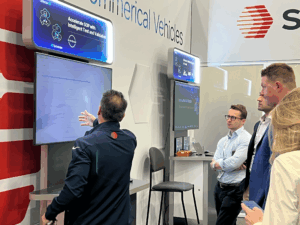
Les thèmes abordés lors de l'ACT Expo n'ont pas seulement confirmé la pertinence de notre orientation ; ils l'ont également renforcée. Ils correspondaient presque exactement à ce que nous avons montré à nos partenaires équipementiers et gestionnaires de flottes.
- Des diagnostics intelligents qui font leurs preuves sur le terrain. Sonatus AI Le technicien ne se contentait pas de signaler les codes d'erreur ; il fournissait des informations contextuelles AI qui guidaient les techniciens vers la bonne solution, plus rapidement.
- Collecte de données intelligente et en temps réel, pilotée par Sonatus Collector AI, permet aux équipementiers et aux gestionnaires de flottes d'utiliser l'AI e générative pour créer et déployer des politiques de collecte de données dynamiques.
- Sonatus Collectionneur AI et Sonatus AI technicien unissent leurs forces pour accélérer le développement des véhicules. Notre collaboration avec le Centre technique européen de Nissan (NTCE) a démontré à quel point l’ AI peut raccourcir les cycles d’essai et de validation.
- AI s en périphérie à grande échelle, avec de véritables partenaires. Sonatus Collector AI, associé à Sonatus AI Director, offre aux équipementiers une chaîne d’outils MLOps spécifique au secteur automobile pour le déploiement et la gestion de modèles d’apprentissage automatique embarqués.
En résumé
Dans le secteur des véhicules utilitaires, les gagnants ne seront pas simplement ceux qui collecteront le plus de données. Ce seront ceux qui sauront les replacer dans leur contexte, les coordonner et agir en conséquence — tout au long du cycle de vie du véhicule, en temps réel. Le salon ACT Expo 2026 a confirmé la pertinence de ce que nous développons chez Sonatus. La demande en matière d’intelligence en périphérie, de plateformes logicielles adaptatives et d’ AI axée sur l’exploitation ne cesse de s’accélérer.