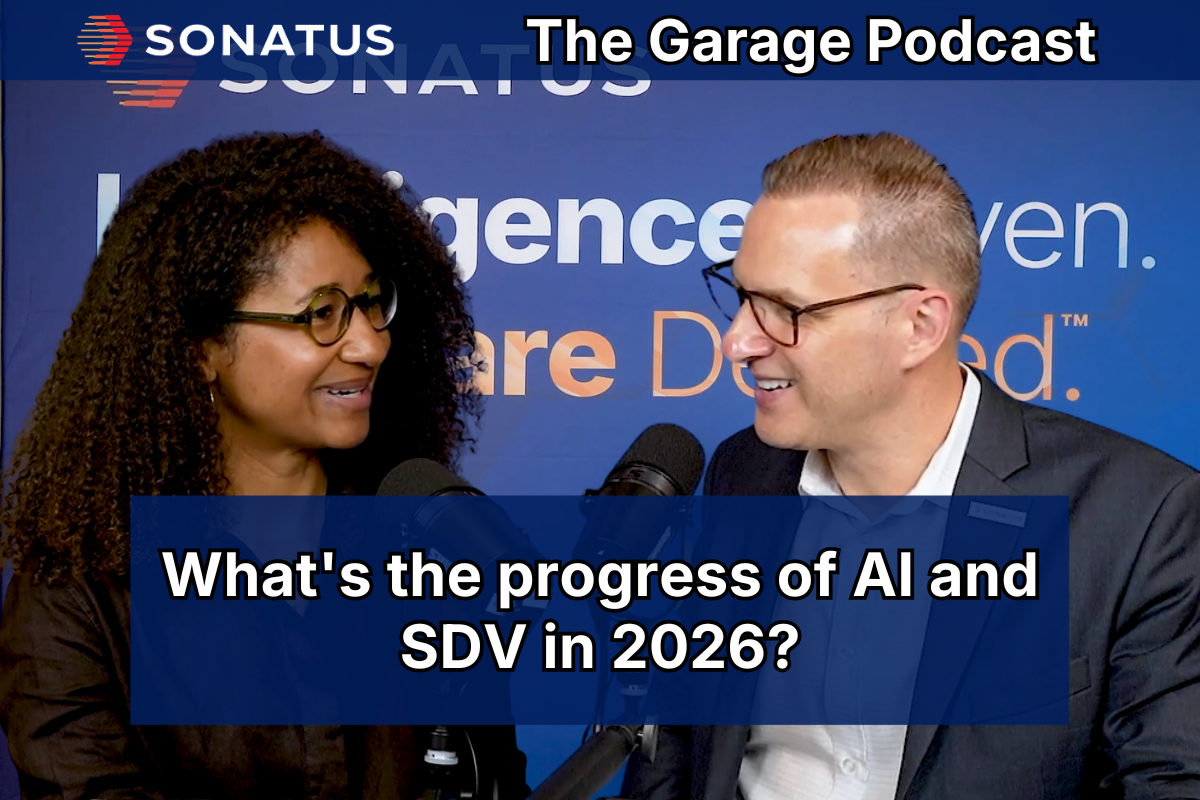
The Garage Podcast: Staffel 4, Folge 10
Autonomer Lkw-Verkehr, Innovation und Flottendaten
mit Matt McLelland von Covenant Logistics
Diese Podcast-Folge wurde live auf der ACT Expo 2026 aufgezeichnet. Darin spricht Matt McLelland von Covenant Logistics darüber, wie das Unternehmen verschiedene Flottentechnologien bewertet – von autonomen Fahrzeugen und Elektro-Lkw bis hin zur Datenanalyse. Er stellt praktische Anwendungen wie elektrische APUs vor und erläutert, wie die Kombination verschiedener Datenquellen den notwendigen Kontext liefert, um die Sicherheit und das Wohlbefinden der Fahrer proaktiv zu verbessern.
Nur-Audio-Version anhören:
Transkript der Folge | Autonomes Lkw-Transportwesen, Innovation und Flottendaten
Inhaltsverzeichnis
Heute bei „ The Garage “ senden wir live von der ACT Expo 2026 in Las Vegas, Nevada. Hier in dieser Halle ist die Ausstellungsfläche voll mit Technologien aller Art – von Fuhrparks über Antriebstechnologien bis hin zu Lkw und allem, was dazugehört.
Und eine der Erkenntnisse, die wir gewinnen, wenn wir mit immer mehr Kunden sprechen, ist die Vielfalt der Anforderungen verschiedener Fuhrparks und ihrer Betriebsabläufe.
Wir beobachten Fälle, in denen Fuhrparks daran interessiert sind, mehr über autonome Fahrzeuge und autonome Technologien zu erfahren und zu verstehen, wie diese zur Optimierung ihrer Betriebsabläufe beitragen. Wir sehen, wie sich verschiedene Antriebsarten – von Elektro- über Biodiesel- bis hin zu konventionellem Dieselantrieb und allem dazwischen – auf ihre Nachhaltigkeit und ihre Betriebsabläufe auswirken können.
Und wir beobachten, wie Fuhrparks mit verschiedenen Arten von Herausforderungen umgehen – von der Sicherheit über das Fahrverhalten bis hin zur Vorbeugung von Pannen und sogar zur Antizipation künftiger Probleme bei den Fahrern.
1:01 Vorstellung des Gastes: Matt McLelland
Um darüber zu sprechen, wollten wir einen Gast einladen, der bei einem der führenden Fuhrparkunternehmen der Branche tätig ist. Unser heutiger Gast ist daher Matt McClelland, der bei Covenant Logistics für Innovation und Nachhaltigkeit verantwortlich ist. Matt ist heute bei uns, um über die Erfahrungen seines Unternehmens als Fuhrparkbetreiber zu sprechen, über die Technologien, die für sie wichtig sind, und darüber, was sie in Zukunft einsetzen möchten. Dabei erzählt er einige wirklich interessante Geschichten über praktische Anwendungsbeispiele, wie Technologie Fuhrparks zugutekommen kann. Es ist ein sehr interessantes Gespräch.
Los geht’s!
Willkommen bei „ The Garage “. Ich bin John Heinlein, Chief Marketing Officer bei „ Sonatus “. Wir sind hier auf der ACT Expo 2026 in Las Vegas und freuen uns sehr, Matt zu treffen. Matt, willkommen bei „ The Garage “. Hallo.
Danke für die Einladung.
Ich freue mich riesig darauf, mit dir zu plaudern.
Wir freuen uns, dass Sie sich etwas Zeit für uns genommen haben.
Ja.
Könntest du uns zunächst etwas über dich und deinen Werdegang erzählen?
Klar. Ja. Matt McLelland. Ich bin bei Covenant Logistics für Nachhaltigkeit und Innovation zuständig.
Wir sind – für diejenigen unter Ihnen, die es noch nicht wissen – ein externes Logistikunternehmen. Wir bieten Lagerhaltung, LKW-Transporte, Speditionsdienstleistungen und Transportmanagement an, verfügen aber vor allem über eine große Flotte an LKWs. Richtig? Und genau deshalb bin ich hier.
2:17 Matts Rolle und sein Fokus auf Innovation
Ich bin hier, um mich mit alternativen Kraftstoffen zu beschäftigen. Ich bin hier, um mich mit all den Dingen auseinanderzusetzen, die ich wissen muss, um unseren Kunden umweltfreundlichere, sauberere und effizientere Lösungen anbieten zu können als das, was wir heute tun. Es gibt noch einige andere Dinge, die ebenfalls unter den Begriff „Innovation“ fallen, aber im Großen und Ganzen bin ich, wie ihr wisst, wegen der Lkw hier – und eigentlich auch wegen einiger der AI. Okay.
Ja. Na ja, hoffentlich reden wir über all diese Dinge.
Ja. Ja. Erzähl uns doch mal etwas über deinen Werdegang. Was hast du vorher gemacht? Woher kommst du?
Oh, wow. Weißt du, das ist irgendwie lustig. Ich war lange Zeit in der IT tätig, genau wie unser gemeinsamer Freund. Ja.
Das war der Anlass, warum wir uns überhaupt kennengelernt haben.
Lawrence war ebenfalls zu Gast im Podcast.
Lawrence war im Podcast zu Gast. Ja. Weiter so, Lawrence! Also, ich habe so ziemlich meine gesamte berufliche Laufbahn in der IT verbracht. Am Ende leitete ich ein Innovationslabor bei einem 3PL, einem Konkurrenten unseres Unternehmens.
Nun, die Idee war, dass wir 10.000 Quadratfuß Fläche mit den neuesten und besten Technologien füllen sollten, die es im Lagerbereich gab: Roboter, Drohnen, die den Lagerbestand scannten – all diese Dinge, die Kunden wollten und für die sie uns jährlich Millionen von Dollar bezahlten, damit wir die besten verfügbaren Lösungen bereitstellten. Sie wollten all das sehen, was es an der Spitze der Technologie gab. Das habe ich mehrere Jahre lang für dieses Unternehmen, Kenco Logistics, gemacht, habe dann aber einen neuen Weg eingeschlagen und bin zu Covenant gewechselt. Und bei Covenant bin ich nun schon seit acht Jahren. Ich glaube, ich bin eher in einer IT-Innovationsrolle eingestiegen, aber der Schwerpunkt hat sich dann, wahrscheinlich so um 2018/2019, mehr in Richtung Nachhaltigkeit verlagert.
Bei meiner Karriere ist es genauso.
Und ich habe – ich habe – ich habe mit einem Fachgebiet angefangen und mich dann auf verwandte Bereiche verlagert.
Und es ist schon komisch, wie sich der eigene berufliche Werdegang entwickelt.
Ich habe mich nicht auf diese Stelle beworben. Es hat sich einfach so ergeben. Eines Tages sagte unser Geschäftsführer nämlich: „Lass uns mal über deine Aufgaben und deine KPIs sprechen. Und auch über deine Berufsbezeichnung.“
Und, weißt du, das ist eigentlich eine längere Geschichte, aber damals gab es viele Fragen zum Thema Autonomie. Es gab viele Fragen zu Elektro-Lkw. Es gab viele Fragen zu alternativen Kraftstoffen. Vieles davon, John, haben wir damals schon umgesetzt.
Es war einfach eine Möglichkeit, alles irgendwie zusammenzufassen, unter einem Titel und in einer Abteilung zusammenzufassen – und genau da stehen wir heute.
4:09 Persönliche Einblicke und Wissenswertes
Das ist wirklich fantastisch. Also, als Erstes musst du uns doch mal eine lustige Anekdote über dich erzählen. Wir lernen unsere Gäste ja immer gerne besser kennen.
Oh, wow. Eine lustige Anekdote. Also, ich bin wirklich so jemand, der einmal im Monat mit dem Hängegleiter fliegt und mit Haien taucht und so weiter, aber im Januar war ich in der Antarktis – und zwar auf einem Expeditionsschiff von National Geographic.
Das ist fantastisch.
Ja. Das war echt cool.
Und wie lange hat die Reise gedauert?
Wir waren zwölf Tage dort.
Es dauerte zwei Tage, um die Drake-Passage zu durchqueren, fünf Tage dort, und dann zwei Tage, um zur Drake-Passage zu gelangen, sechs Tage dort, und dann zwei Tage für die Rückfahrt.
Tja, das ist ja eine ziemlich unglaubliche Geschichte.
Ja. Die Drake-Passage ist eine der verrücktesten Überfahrten überhaupt, weißt du. Dort treffen drei Ozeane aufeinander, und es gibt diese riesigen Wellen – aber wir hatten eigentlich gar kein schlechtes Wetter. Wir hatten tolles Wetter. Es war also eine fantastische Reise.
Das ist unglaublich. Da kann ich überhaupt nicht mithalten.
Also erzähle ich dir eine andere Geschichte … Es ist kein Wettbewerb.
Du hast das Tauchen angesprochen. Ich bin ein begeisterter Taucher.
Ach, gut.
Fantastisch. Ehemaliger Tauchlehrer. Aber das ist eine andere Geschichte, die ich ein anderes Mal erzählen werde. Fantastisch.
Viele Tauchreisen mit Übernachtung auf dem Boot. Ich auch. Das macht riesigen Spaß.
Das gefällt mir. Genau so.
Meine Frau macht das, mein Sohn macht das – das ist eine Familienangelegenheit.
Das ist also unsere Verbindung. Ja. Fantastisch.
Ich wusste, dass ich dich mochte.
Na gut.
5:10 Aktuelle Trends in der Nutzfahrzeugtechnik
Wir sind also hier auf der Messe ACT. Hier gibt es die unglaublichsten und vielfältigsten – ja, genau – Nutzfahrzeugtechnologien in allen Formen und Größen: Elektro- und Biokraftstoffe, Lkw, große und kleine Traktoren sowie Anhänger. Welche Technologie begeistert dich gerade besonders und was beschäftigt dich im Moment?
Weißt du, das ist interessant. Es gibt, na ja, es gibt nicht nur eine einzige Lösung. Stimmt’s? Ich meine, wir sagen ja gerne, dass ich in meinem Lösungsarsenal auch ein paar Diesel-Lkw haben werde.
Ich werde einige Elektro-Lkw anschaffen. Ich werde einige CNG-Lkw anschaffen. Derzeit besteht unsere Flotte größtenteils aus Diesel-Lkw. Genauer gesagt sind es ausschließlich Diesel-Lkw.
Wir sind Fernfahrer, das heißt, wir legen lange Strecken zurück. Manchmal sind zwei Fahrer in den Lkw unterwegs. Wir können bis zu tausend Meilen am Tag zurücklegen.
Es gibt nicht viele CO₂-freie Lösungen, die uns so weit bringen, wie wir müssen. Außerdem ist so gut wie alles, was nicht mit Diesel betrieben wird, in der Regel – wenn auch nicht immer – teurer. Und das sind wirklich schwierige Gespräche, die wir mit unseren Verladern führen müssen. Sie wollen wissen, welche Lösungen man ihnen anbieten kann.
Es ist meine Aufgabe, mehr oder weniger zu wissen, was das alles ist, diese Modelle vorzustellen, über die Kostensteigerungen und die Kostenvorteile zu sprechen, und wir gehen das dann einfach der Reihe nach durch. Und wir haben einige elektrische Hof-Zugmaschinen, was für uns in den letzten Jahren noch relativ neu war. Wir beschäftigen uns gerade mit der Elektrifizierung der Klasse 8. Tatsächlich werden wir in ein paar Wochen eine Vorführung des Tesla Semi durchführen, worauf wir uns riesig freuen.
Das ist toll.
Es klingt also so, als würden Sie diese Technologien sehr genau im Auge behalten und herausfinden, wo sie sinnvoll sind, warum sie sinnvoll sind, wann sie in Ihren Fuhrpark passen und wann sie in Ihr Portfolio passen.
Ja, genau. Okay.
6:41 Ein Blick auf Technologien für autonome Fahrzeuge
Wenn wir nun über Technologie sprechen – also Podcasts –, dann beschäftigen wir uns mit Software und insbesondere mit künstlicher Intelligenz. Wie sehen Sie Technologie … Welche Aspekte interessieren Sie, von denen Sie glauben, dass sie entweder Ihrer Flotte direkt oder Flotten wie der Ihren einen Mehrwert bieten können?
Vor fünf Jahren habe ich also angefangen … Ich wurde eingeladen, bei den Anfängen von TuSimple mitzumachen – als TuSimple noch aktuell war, richtig? – TuSimple entwickelt autonome Lkw der Klasse 8. Ich bin hingefahren, habe mir angesehen, was sie machten, und zugehört. Sie gehörten wirklich zu den Ersten. Stimmt’s?
Anthony Levandowski und einige dieser anderen Leute von Pronto und, oh Mann, wie hieß das noch mal, Otto – es gab da ein paar Start-ups in der Frühphase, die vielleicht 2019 etwas Aufmerksamkeit auf sich gezogen haben. Aber 2020 haben wir uns TuSimple angesehen, dann Kodiak, dann Embark – das es mittlerweile nicht mehr gibt –, dann Torq und Aurora. Wir haben also Partnerschaften mit Aurora und Torq. Aber die Idee einer Expressflotte, die nachts lange Strecken zurücklegt, passt wirklich sehr gut zum Thema Autonomie. Sprechen wir also über die ultimativen „ AI “.
Stimmt’s? Da hast du einen Lkw der Klasse 8, der mit Anhänger und allem Drum und Dran achtzigtausend Pfund wiegt. Der fährt dann möglicherweise ohne Fahrer auf der Straße. Ich meine, „ AI “ geht es wirklich nicht mehr.
Ja. Stimmt's?
Das ist schon ziemlich unglaublich.
Ich bin also seit fünf Jahren in dieser Branche tätig. Vieles an meinem Job liebe ich, John, weil ich nicht nur mit unseren Versendern und der Geschäftsleitung sprechen kann, sondern auch an all diesen Besprechungen teilnehme – zusammen mit JB Hunt, Warner und CR England. Ich bin bei Schneider. Ich bin bei all meinen Mitbewerbern. Verstehst du? Leute, mit denen ich im Wettbewerb stehe, aber wir alle versuchen, uns mit Technologie auseinanderzusetzen.
Wir versuchen alle zu verstehen, wie diese unglaubliche Erfindung namens „autonome Fahrzeuge“ uns alle zusammenbringt, denn wir brauchen einander. Wir alle müssen Lkw kaufen, damit dies eine nachhaltige Lösung für die Menschen wird. Ich habe also die Möglichkeit, gleichzeitig mit meinen Kollegen und meinen Konkurrenten zusammenzuarbeiten.
Weißt du, das ist eine interessante Sichtweise, die du da ansprichst, denn einerseits wird oft gefragt, wer die Hauptkonkurrenten sind – zum Beispiel in Bezug auf das, was wir tun. Und oft sind es OEMs oder Anbieter, die versuchen, alles selbst zu machen. Und ich glaube, eine meiner Beobachtungen ist, dass der Versuch, alles selbst zu machen und das Rad immer wieder neu zu erfinden, ein sicherer Weg ist, niemals eine Lösung zu liefern. Ja. Man muss Technologien wirklich teilen und – wie du es beschreibst – mit seinen Konkurrenten zusammenarbeiten, um gemeinsame Lösungen zu finden, wo es Sinn macht, und dort zu konkurrieren, wo es Sinn macht. Ich halte das für eine interessante Balance.
Ja. Du weißt doch, wie es heißt: „Eine steigende Flut hebt alle Boote“? Genau. Nun, diese Flut ist eine Reihe neuer Lösungen, die es zuvor noch nicht gab.
Richtig.
Weißt du, Aurora, Torq oder Kodiak – die werden es nicht schaffen. Ich habe gerade eine Demo gesehen. Genau das meine ich, und Waabi – ich möchte sie nicht außer Acht lassen – Raquel und ihr Team bei Waabi. Aber wenn sie ihre Lieferwagen nur an einen einzigen Anbieter vermieten, werden sie keinen Erfolg haben.
Sie müssen Lkw an alle verkaufen.
Und so arbeiten wir gemeinsam daran, herauszufinden, welche Probleme sie noch nicht gelöst haben. Gibt es Dinge, bei denen wir – so seltsam es auch klingen mag – zusammenarbeiten können, damit das funktioniert? Derzeit haben wir also noch keine. Wir testen im Moment keine autonomen Lkw. Wir prüfen das gerade. Wir sind ja immer offen für alles.
9:51 Herausforderungen im Flottenmanagement
Also, ich meine, bei Ihrer Flotte – es klingt so, als würden Sie versuchen, Ihre Lkw relativ kurz im Einsatz zu behalten. Und das wirkt sich auf Ihre Vorgehensweise und Ihre Arbeitsweise aus. Natürlich gibt es bei den Flotten unterschiedliche Kombinationen von Faktoren. Wir haben uns vorhin schon darüber unterhalten, dass je nach den Anforderungen der Flotte und den jeweiligen Aufgaben der verschiedenen Flotten unterschiedliche Ansätze verfolgt werden können, zum Beispiel bei der Wartung, der vorbeugenden Diagnose und so weiter. Welche Technologien hast du beobachtet, die du für interessant hältst – aufstrebende Technologien in diesem Bereich?
Wissen Sie, das Interessante daran ist, dass Sie die Haltedauer ansprechen. Richtig. Bei manchen Investitionen, die man in einen Lkw tätigt, muss man ihn länger als zwei Jahre behalten, damit sie sich auszahlen. Und genau darin liegt ein Teil der Herausforderung, denn so funktioniert nun einmal unser Handelszyklus.
Ein neuerer Lkw ist für uns auch ein Instrument zur Mitarbeitergewinnung und -bindung. Es gibt also viele Gründe, warum wir uns für zwei Jahre entscheiden, während es bei einigen unserer Wettbewerber vielleicht drei Jahre sind. Manchmal müssen wir jedoch auf eine Technologie verzichten, weil sich die Investition, wie Sie wissen, über einen Zeitraum amortisiert, der länger ist, als wir das Fahrzeug besitzen werden. Elektrische APUs haben wir jedoch eingeführt. Das ist ein Gerät – für die Zuhörer, die vielleicht nicht wissen, was das ist. Es handelt sich um eine Batteriebaugruppe, die unter dem Sitz der Schlafkabine untergebracht ist.
Und es lädt sich tagsüber auf, während der Lkw fährt.
Und nachts versorgt es dann eine Klimaanlage, eine Heizung oder ein CPAP-Gerät mit Strom, sodass man den Motor nicht laufen lassen muss.
Laufen. Genau.
Ja. Also, ein Lkw verbraucht etwa acht Zehntel Gallone Kraftstoff pro Stunde, wenn er nur im Leerlauf läuft. Und dann sind da noch all die Abgase, die aus dem Auspuff kommen. Stimmt’s?
Und das ist es eben. Und dann ist da noch das Klappern und der Lärm, und, na ja, dann sind da noch etwa fünfzig andere Lkw um dich herum, die alle dasselbe tun. Genau. Man steigt einfach aus seinem Lkw aus, während fünfzig Lkw im Leerlauf laufen.
Man denkt sich so: „Oh, was ist das denn an meinem Körper? Ich will einfach nur auf die Toilette.“
Es ist also nicht besonders umweltfreundlich. Es ist nicht besonders kosteneffizient und verursacht Lärm für den Fahrer, der versucht zu schlafen.
Aber wir tun dies, weil sich diese Investitionen über die gesamte Nutzungsdauer des Lkw sowohl hinsichtlich der direkten als auch der indirekten Kosten amortisieren. Daher passt das für uns wirklich gut. Es ist schon komisch, denn als an der New Yorker Börse notiertes Unternehmen gäbe es wahrscheinlich bessere Möglichkeiten, unser Kapital einzusetzen. Aber aus Sicht unseres Führungsteams ist es das Richtige, solange wir weder Geld verlieren noch Geld verdienen.
Das ist das Richtige für die Umwelt. Das ist das Richtige für unsere Fahrer. Das ist gewissermaßen auch das Richtige für die Branche. Und deshalb ist das eine Investition, die wir schon seit langer Zeit tätigen.
12:09 Die Bedeutung von Daten im Flottenbetrieb
Das ist toll. Ja. Ich meine, wir haben vorhin über Daten gesprochen. Daten sind ja das Lebenselixier so vieler verschiedener Technologien.
Und ich glaube, wir haben uns gerade einige Arbeiten angesehen, die wir hier auf der Messe zeigen. Ja, toll, wirklich beeindruckend.
Nun, zum Beispiel zur Überwachung von Ablenkungen beim Fahren – also Sicherheitsaspekte. Vorbeugende Wartung und eine Reihe ähnlicher Dinge. Was bedeuten Daten für Sie und inwieweit sind Daten – angesichts Ihres IT-Hintergrunds – für Sie so etwas wie der Atem des Alltags?
Der Teufel steckt im Detail, nicht wahr? Und bei den Details geht es ja immer um die Daten, oder?
12:39 Ohne Daten bist du nur eine weitere Person mit einer Meinung
Manchmal geraten einige meiner Freunde und ich in Diskussionen über, na ja, Politik und Sport und alle möglichen anderen Themen. Aber ich frage immer: „Hast du … welche Daten stützen das? Sag mir doch mal, woher du diese Statistik hast.“ Und manchmal wissen die Leute das einfach nicht. Stimmt’s?
Du meinst also, du hast dir das einfach ausgedacht, ist es das? Verstehst du? Also, ich bin ein Big-Data-Typ. Richtig?
Ich habe zu Hause auf meinem Schreibtisch eine Tasse, auf der steht: „Ohne Daten bist du nur eine weitere Person mit einer Meinung“. Stimmt’s? Stimmt’s? Willst du auch eine?
Das gefällt mir total. Ich habe noch eins übrig.
Das gefällt mir sehr gut.
Ja. Also, weißt du, ich bin voll und ganz dafür. Ich glaube, ohne das … Ach übrigens, meine Frau macht sie total verrückt, weißt du, wenn wir uns über irgendetwas streiten und sie dann sagt: „Warum siehst du das so?“ Und ich so: „Keine Ahnung.“
Das ist einfach mein Eindruck. Ich denke mir dann: „Na ja, ich bin kein … ich bin ein Datenmensch. Du musst mir schon ein Beispiel geben, wovon du redest.“ Ich bin also ein echter Datenmensch.
Was du hier machst und was „ Sonatus “ leistet, ist einfach fantastisch.
Also, weißt du, ich glaube, manchmal denken normale Menschen wie ich – du bist ja Doktorand.
Doktor der Elektrotechnik. Ja.
Ja. Ja. Das bin ich nicht. Aber manchmal brauche ich ein Tool wie Claude oder einige der Dinge, an denen du gerade arbeitest, um Zusammenhänge zu erkennen. Ich habe erst kürzlich drei verschiedene Tabellen in Claude hochgeladen. Es handelte sich um Daten zu Fahrspuren, Lkw-Ladungen oder Tankstellenstandorten sowie einige weitere Datenpunkte, denn ich habe versucht, all das zusammenzufügen und ein Diagramm zu erstellen. Ich habe die Daten in dieses Tool hochgeladen, und es hat mir geholfen, Zusammenhänge zwischen Datenpunkten herzustellen, von denen ich eigentlich nicht gedacht hätte, dass sie Sinn ergeben. Aber sobald das geklappt hatte – etwa dreißig Sekunden später –, hatte ich eine wunderschöne Folie, die ich dem Kunden zeigen konnte und die genau die Frage beantwortete, um deren Beantwortung er mich gebeten hatte.
Das ist ein so wichtiger Punkt, den Sie da ansprechen: Wenn man Daten hat, sage ich gerne, dass eins plus eins gleich drei oder eins plus eins gleich sieben ist. Wenn man verschiedene Datenquellen für sich allein hat, ist das großartig. Wenn man sie kombiniert, kann man Erkenntnisse gewinnen, die vorher nicht da waren oder nicht leicht zu finden waren. In einer der Demos, die wir Ihnen vorhin gezeigt haben, haben wir unter anderem veranschaulicht, wie wir Daten aus dem Fahrzeug nutzen können – Daten, die der Kunde vielleicht von seinem Datenanbieter erhält, also bereits vorhandene Daten –, diese aber mit anderen Daten kombinieren, über die er nicht verfügt, und so einen Mehrwert schaffen, sei es in Form von Erkenntnissen, Diagnosen, der Vorhersage von Ausfällen oder einer Vielzahl anderer Aspekte. Doch erst wenn man diese Datenquellen kombiniert, gelangt man zu potenziell neuen Erkenntnissen. Das ist einer der Schwerpunkte, auf die wir uns konzentrieren wollen.
Ja, ich halte einen Vortrag über Innovation und Disruption. Hin und wieder werde ich gebeten, eine Keynote zu halten, aber ich habe diese Folie, auf der steht: „Daten ohne Kontext sind bedeutungslos.“ Und manchmal sind es eben diese zusätzlichen Datenpunkte, die für sich genommen zwar nichts bedeuten, aber zusammen den Kontext liefern, den wir brauchen, um die Entscheidungen zu treffen, die wir treffen müssen.
15:04 Diagnose von Problemen mit Fahrzeugen und Fahrern
Das stimmt. Das stimmt. Und wir stellen ein weiteres Diagnoseprodukt vor, das sich wahrscheinlich eher an Erstausrüster richtet als an Sie selbst und Ihre Flottenkunden. Aber einer der Ingenieure, der mit uns zusammengearbeitet hat, sagte, wenn wir ihnen die Analyse zeigen, sagen wir: „Hey, wir sehen, dass da dieses Problem vorliegt.“
Und wir sagen: „Wir glauben, dass dies der Grund für die Störung an Ihrem Fahrzeug ist.“ Und dann sagen sie: „Aber beweisen Sie es mir doch.“ „Ah“, sagen sie, „hier ist der Grund. Wir zeigen es Ihnen: Hier sind die Quelldaten, auf die wir uns stützen.“
Hier ist Seite 74 Ihres Wartungshandbuchs, und hier ist die Wartungshistorie. Und wenn man das alles zusammennimmt, denkt man sich: „Jetzt glaube ich Ihnen.“ Es ist also das Gegenteil von – was auch immer das Gegenteil einer Halluzination ist. Es zeigt unsere Vorarbeit, es liefert die Belege dafür, dass da wirklich Substanz steckt.
Wir nutzen ein Produkt. Vielleicht handelt es sich um ein Produkt eines Mitbewerbers, daher werde ich dessen Namen nicht nennen. Als sie es uns jedoch vorstellten, sagte er: „Ich gebe Ihnen ein Beispiel für etwas, das bei einem Kunden passiert ist, bei dem wir das Produkt in Betrieb genommen haben.“ Er sagte: „Wir haben einen Fahrer im Büro angerufen.“
Der Personalchef sagte: „Hey. Setz dich bitte hin. Wir haben ein Problem.“ Der Typ hatte keine Ahnung, wovon er sprach.
Er sagte: „Unsere Software sagt voraus, dass du in den nächsten zwei Wochen einen Unfall haben wirst.“
Und er meinte so: „Wovon redest du denn?“ Er sagte: „Weißt du, denk mal an meinen ‚Minority Report‘. Ich wusste, dass du das sagen würdest.“ Ja.
Und die sagen dann so: „Na ja, es ist nicht nur eine Sache. Du hattest unregelmäßige Ausfallzeiten.“ Ja. Der – wie heißt der noch mal, J132-Anschluss, oder wie auch immer – der Lkw zeigt an, dass du ungewöhnliche Fahrmanöver hattest, dass du ein paar Mal gegen den Bordstein gefahren bist und dass du unregelmäßig beschleunigt hast.
Es gibt da noch etwas: Du hast einen anderen Zahlungsrhythmus beantragt und um einen Vorschuss gebeten.
Es kam vor, dass du bei einigen deiner Lieferungen zu spät warst. Du bist zu spät zur Arbeit erschienen. Das sind also unabhängige Vorkommnisse. Keines dieser Dinge hat irgendeine Bedeutung.
Aber all diese Daten waren auf sechs verschiedene Systeme verteilt. Sie haben das Ganze dann zusammengetragen. Er fragte: „Was ist los?“ Und der Mann sah den Personalchef nur an und sagte: „Mein Vater liegt im Krankenhaus, und er wird wahrscheinlich in eine Demenzstation müssen, und ich kann nicht aufhören, darüber nachzudenken“, und ihm traten Tränen in die Augen. Und er sagte: „Ich kann mich nicht konzentrieren, weil ich mir Sorgen um meinen Vater mache.“ Daraufhin sagte der Personalchef: „Nimm dir eine Woche bezahlten Urlaub, kümmere dich um die Sache, komm dann wieder zur Arbeit – alles wird gut.“ Also, wisst ihr, die Zeichen der Zeit zu deuten und die Tools, die ihr entwickelt oder einsetzt, werden euch dabei helfen, Sicherheitsabteilungen und Personalabteilungen bei der Lösung dieser Probleme zu unterstützen.
17:19 Praktische Anwendungen von Datenerkenntnissen
Das stimmt. Und, weißt du, Sicherheit und Ausfallzeiten – das hängt alles zusammen. Stimmt’s? Ja. Weißt du, um diesen Mann ist jetzt alles geregelt. Sie haben einen möglichen Unfall verhindert.
Sie haben sogar… Er findet es toll.
Sie lieben die Gesellschaft. Alle gewinnen dabei.
Ja. Stimmt’s? Manchmal denke ich also, wenn man diese Lösungen miteinander kombiniert, kann man, wie ich schon sagte, mehr erreichen als die Summe der Einzelteile.
Ja, auf jeden Fall.
17:44 Uhr – Höhepunkte der Expo
Und was hat dir diese Woche hier auf der Messe am besten gefallen?
Weißt du, wir machen gerade diese Tesla-Semi-Vorführung. Ja. Und ich war vor ein paar Wochen dort im Werk und habe ihn mir angesehen. Aber hier steht er ja hier in der Halle. Das ist der neue, weißt du. Richtig? Das ist die serienreife Version.
Und deshalb freue ich mich riesig, das zu sehen.
International hat diesen sogenannten S13-Motor, der ganz anders funktioniert als herkömmliche Motoren. Dadurch ist der Kraftstoffverbrauch geringer. Auch in puncto Emissionen ist er umweltfreundlicher. Das ist wirklich beeindruckend.
Aber eigentlich hat die Halle erst gestern eröffnet. Also, weißt du, wenn dieser Podcast vorbei ist, werde ich rausgehen und durch die Hallen schlendern.
Fantastisch. Hey, hör mal. Ich weiß es wirklich zu schätzen, dass du dir Zeit für uns genommen hast. Ich weiß, dass du viel zu tun hast.
18:26 Schlussgedanken und Zukunftsperspektiven
Ja. Es ist toll, solche Sichtweisen wie die Ihre zu hören. Die Anforderungen Ihrer Flotte unterscheiden sich von denen anderer Flotten, mit denen wir sprechen. Mit Ihrer äußerst wertvollen Sichtweise haben Sie uns vor wenigen Minuten herausgefordert und uns einige großartige Ideen geliefert.
Wir freuen uns also riesig, dass ihr dabei seid, und wünschen euch viel Spaß bei der Show.
Ja. Danke für die Einladung.
Na gut.
Na gut. Vielen Dank.
Wenn euch diese Folge gefällt, dann klickt bitte auf „Gefällt mir“ und abonniert unseren Kanal, um weitere ähnliche Folgen zu sehen – sowohl aus dieser Serie als auch aus unserem Heimstudio. Wir freuen uns darauf, euch schon bald in einer neuen Folge wiederzusehen.
Aktuelle Folgen
The Garage Podcast
Wie können gewerbliche Fuhrparks von „ AI “ profitieren?
The Garage Podcast
Kann die individuelle Gestaltung von Fahrzeugen die Kundenbindung fördern?