(This article was originally published on Forbes.com)
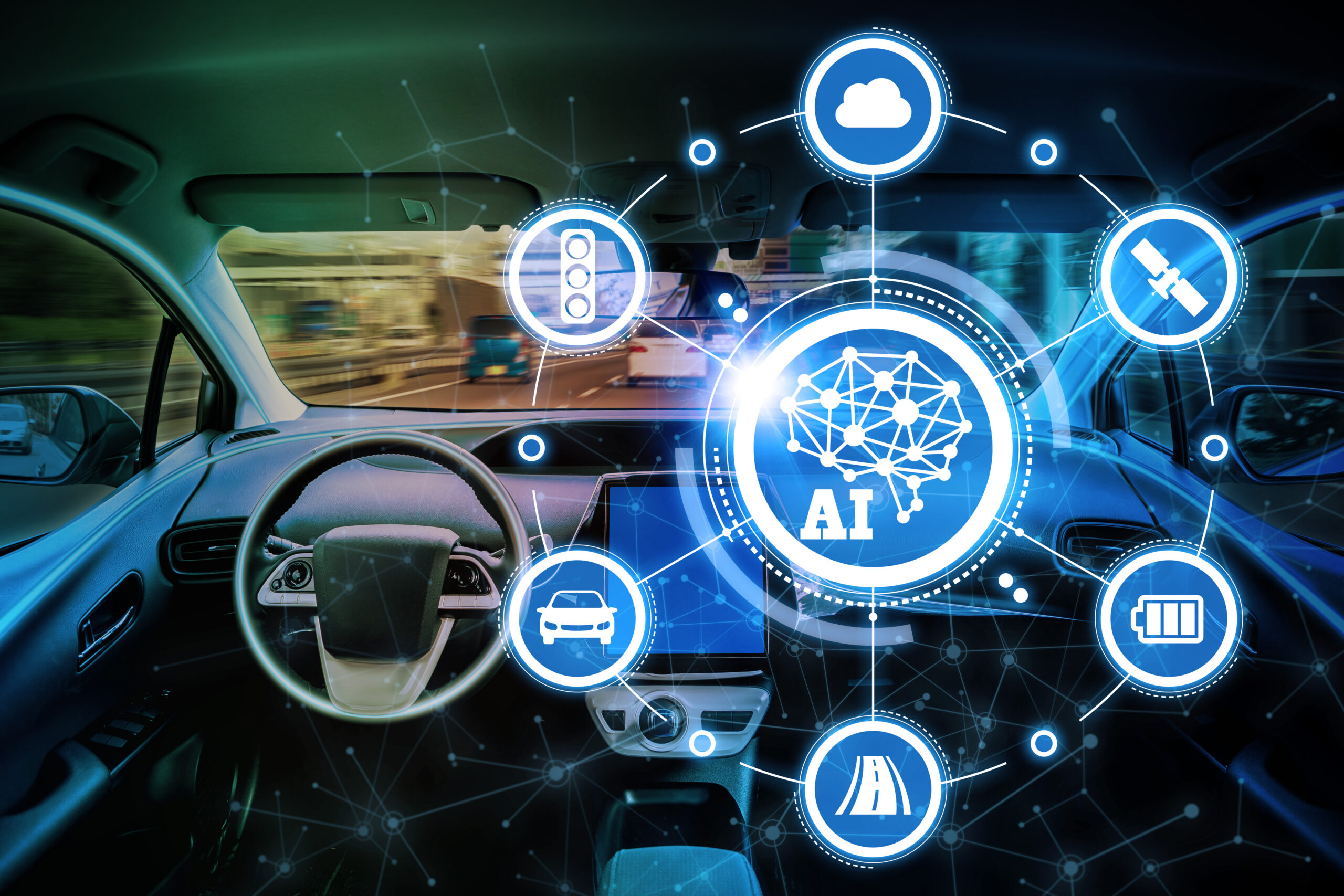
Software-defined vehicles are quickly becoming intelligent, self-improving systems powered by artificial intelligence (AI). As their capabilities expand, the central challenge is no longer building bigger models but managing the enormous volumes of data those models depend on.
An SDV can generate up to 2 terabytes of raw data per day, depending on the complexity of its IoT, telematics and sensor systems. Even at the low end, that’s the equivalent of hundreds of HD movies created from a single vehicle each day. Multiplied across millions of SDVs, it adds up to an ecosystem producing exabytes of data annually, with most of it still scattered across vehicle and cloud, and underused by AI systems.
Unlike cloud-native companies, automakers navigate fragmented architectures and inconsistent data standards. Each AI deployment, whether for driver assistance, energy management or predictive maintenance, requires custom integration. This slows progress just as vehicles are expected to deliver real-time intelligence.
I believe the next wave of automotive AI hinges on data orchestration—the ability to standardize how information moves between the vehicle, the edge and the cloud so it can be used immediately for learning and automation.
From Bigger Models To Better Data Foundations
The global automotive AI market is expected to grow to nearly $50 billion in value by 2034, up from $4.7 billion in 2025. As investment in algorithms gains steam, the most transformative progress is happening under the hood in how vehicle data is accessed, prepared and utilized by AI algorithms and models.
Inside a modern vehicle, dozens of electronic control units communicate across networks such as CAN and Ethernet. Each subsystem relies on different data definitions, transmission intervals and security layers. For AI engineers, synchronizing these signals remains a complex task that compounds across vehicle lines and suppliers.
Emerging orchestration frameworks can help normalize signals in real time and route data to the appropriate compute in the vehicle or the cloud. Teams can build once on a common data layer and reuse across vehicle lines, reducing integration effort while enabling faster, safer software rollouts at fleet scale.
For automakers, one of the most important elements of orchestration is continuous innovation through event-triggered workflows that allow vehicles to evolve long after they leave the factory.
These workflows connect in-vehicle sensors, AI systems and cloud intelligence to detect conditions and respond automatically. Crash detection offers a clear example. When an impact occurs, orchestrated systems can trigger a coordinated sequence of actions in real time:
• Engage driver-assist modules to bring the car to a safe stop
• Isolate high-voltage circuits to prevent post-crash fires
• Run self-diagnostics to identify damaged components
• Transmit repair data to nearby service centers before the vehicle even arrives
By linking live sensor data with orchestrated responses, automakers can work toward improving safety, reliability and performance through software updates, turning raw data into continuous improvement cycles across a vehicle’s life. These closed-loop feedback loops let OEMs deploy changes faster, learn from real-world events and lower experimentation costs. Deloitte reports that OEMs using centralized (orchestrated) SDV decision-making save 23% in SDV-related R&D spending—up to $700 million in some cases.
Turning Data Orchestration Into Real-World Impact
Automotive AI has moved beyond algorithms. It is now about scaling intelligence safely, efficiently and profitably across millions of connected systems. An effective approach to data orchestration helps make that possible by linking information from development through daily operation and turning mobility into a continuously improving platform.
As vehicles evolve into software ecosystems, orchestration can also help unlock efficiencies, improve safety and deliver measurable financial returns across three core areas:
1. Efficiency: Unified data pipelines reduce redundant integrations and allow AI models to reuse existing network and compute resources, accelerating time-to-market and lowering engineering overhead.
2. Safety: Real-time data access ensures AI systems react immediately to changing road or system conditions, while simulation environments replay historical data to validate performance before deployment.
3. Savings: Software-defined architectures and intelligent orchestration could unlock $400 billion to $600 billion in incremental value by 2030 through faster development cycles, predictive diagnostics and over-the-air feature deployment. Combined with orchestration efficiencies, such as shrinking update cycles from months to weeks, the financial return compounds across fleets as each improvement scales instantly.
What Effective Data Orchestration Looks Like In Practice
For automakers and suppliers working to operationalize orchestration, a small set of principles helps determine whether these efforts scale or stall. I suggest starting with signal normalization, not models. Deploying AI before vehicle data is consistently defined across platforms limits reuse and slows progress. A unified data foundation enables scale.
It’s also important to design orchestration to span the vehicle edge and cloud from the outset. Processing all the data in the cloud adds latency and cost, while pushing everything to the vehicle limits learning. Effective frameworks balance both.
Additionally, treat event-driven workflows as core infrastructure. When faults, crashes or environmental changes automatically trigger actions, vehicles improve continuously without manual intervention. Avoid point solutions that only solve a single problem. Hard-coded logic may work in isolation but often fails at scale. Orchestration should simplify systems over time, not add complexity.
Together, these principles can turn orchestration into an engine for sustained innovation.
Rewriting The Automotive Playbook For The AI Era
A Sonatus survey of more than 500 industry professionals found that some of the top priorities for OEMs in 2025 included data-pipeline integration, AI readiness and cybersecurity, underscoring that the most meaningful advances will come from stronger infrastructure. The survey also found that by 2030, software-defined vehicles are expected to represent much of new global production, marking a fundamental shift in how value is created in the automotive sector.
I believe the manufacturers leading this transition will not just build smarter systems; they will master the data foundations that keep intelligence improving. The next frontier in automotive AI is not autonomy alone. It is about equipping vehicles to learn, adapt and evolve through orchestrated data that turns intelligence into action.