
skip to Main Content
White Paper

Modern Networks are the Backbone of SDVs

The rise of Software-Defined Vehicles (SDVs) promises a new era in automotive technology, where vehicles continuously improve and new features are introduced through software updates even after production.

This vision demands an evolution in vehicle networking infrastructure to enable seamless integration of new functions and features across the vehicle’s lifespan. Traditional vehicle networks, characterized by their static, hardwired nature, are ill-equipped for this task, presenting significant challenges in creating unified, dynamic experiences for users.

Challenges with Current Vehicle Networks

Common limitations with traditional vehicle networks are their inflexibility, bandwidth constraints, and high costs and complexity, to name just a few.
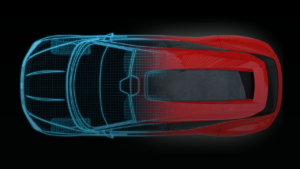
Learn how modern networks address these challenges with:

  • Streamlined Infrastructure
  • Support for Diverse Applications
  • Robust Security Measures
  • Dynamic and Centralized Management

Download Now

Frequently Asked Questions

Traditional vehicle networks are built on static, hardwired architectures (like CAN bus) that are rigid and isolated. This creates several critical limitations:
- Inflexibility: It is nearly impossible to integrate new multi-domain features after the vehicle is built. For example, adding a "sentry mode" that aggregates camera and sensor data across the car to detect vandalism is not feasible with current isolated architectures.
- Bandwidth Constraints: Existing networks lack the speed to handle the massive data flow required by modern applications, such as high-resolution cameras, rear-seat entertainment, and safety-critical ADAS sensors.
- Complexity & Cost: They rely on complex, heavy wiring harnesses and duplicated infrastructure, which increases manufacturing costs and vehicle weight while making troubleshooting difficult.

Modern Ethernet vehicle networks utilize a technology called Time-Sensitive Networking (TSN) (specified by IEEE 802.1 WG) to manage "mixed-criticality" traffic.
- Prioritization: TSN ensures that safety-critical, real-time data (like braking or steering signals) is prioritized with guaranteed low latency.
- Efficient Sharing: Non-critical traffic (like music streaming or map downloads) is allowed to use the remaining bandwidth safely, ensuring it never interferes with vital vehicle operations.

No, it actually significantly enhances security compared to traditional networks. While legacy networks have an expanded attack surface with limited defenses, modern Ethernet introduces robust, IT-grade security protocols used in data centers:
- Encryption & Authentication: Technologies like MACsec and IEEE 802.1X encrypt communications and ensure that only authenticated devices can access the network.
- Identity-Based Networking: This allows the network to authenticate the specific identity of an endpoint (like a sensor or ECU) and apply strict Access Control Lists (ACLs). This ensures that data streams are restricted only to authorized paths, preventing unauthorized access or lateral movement by attackers.

Back To Top