NXP and Sonatus
Sonatus software platforms complement NXP silicon solutions to enable rapid adoption in automotive applications
Sonatus has a years-long partnership with NXP which is in high-volume production today. Sonatus software platforms are integrated with Tier-1 and OEM subsystems based on NXP automotive silicon solutions to serve a range of vehicle needs, including high performance programmable vehicle communication controllers.
Sonatus software also specifically activates differentiating features of NXP silicon for custom hardware acceleration to improve the speed and efficiency of the combined result.
- Achieve fast time to market
- Sonatus platforms are ported and production-ready on NXP Silicon platforms
- Sonatus platforms are featured in NXP GoldVIP reference platform
- Sonatus and NXP have strong engineering relationships that anticipate future design trends and future silicon solutions
“Sonatus AI Director aligns perfectly with NXP’s commitment to delivering scalable, safe, and secure system solutions for SDVs. Leveraging the platform helps us to offer our customers faster integration, enhanced data access, and an edge AI infrastructure”, said Robert Moran, VP and GM Automotive Processors at NXP. “Sonatus AI Director, pre-integrated with NXP eIQ® Auto ML software and tailored for NXP silicon, brings an automotive-grade AI deployment framework to our customers, helping accelerate the innovation cycle. This collaboration aims to shorten development time, streamline deployment and improve data monitoring, taking another step forward in our commitment to making AI-enabled SDVs a reality.”

Webinars | Presentations
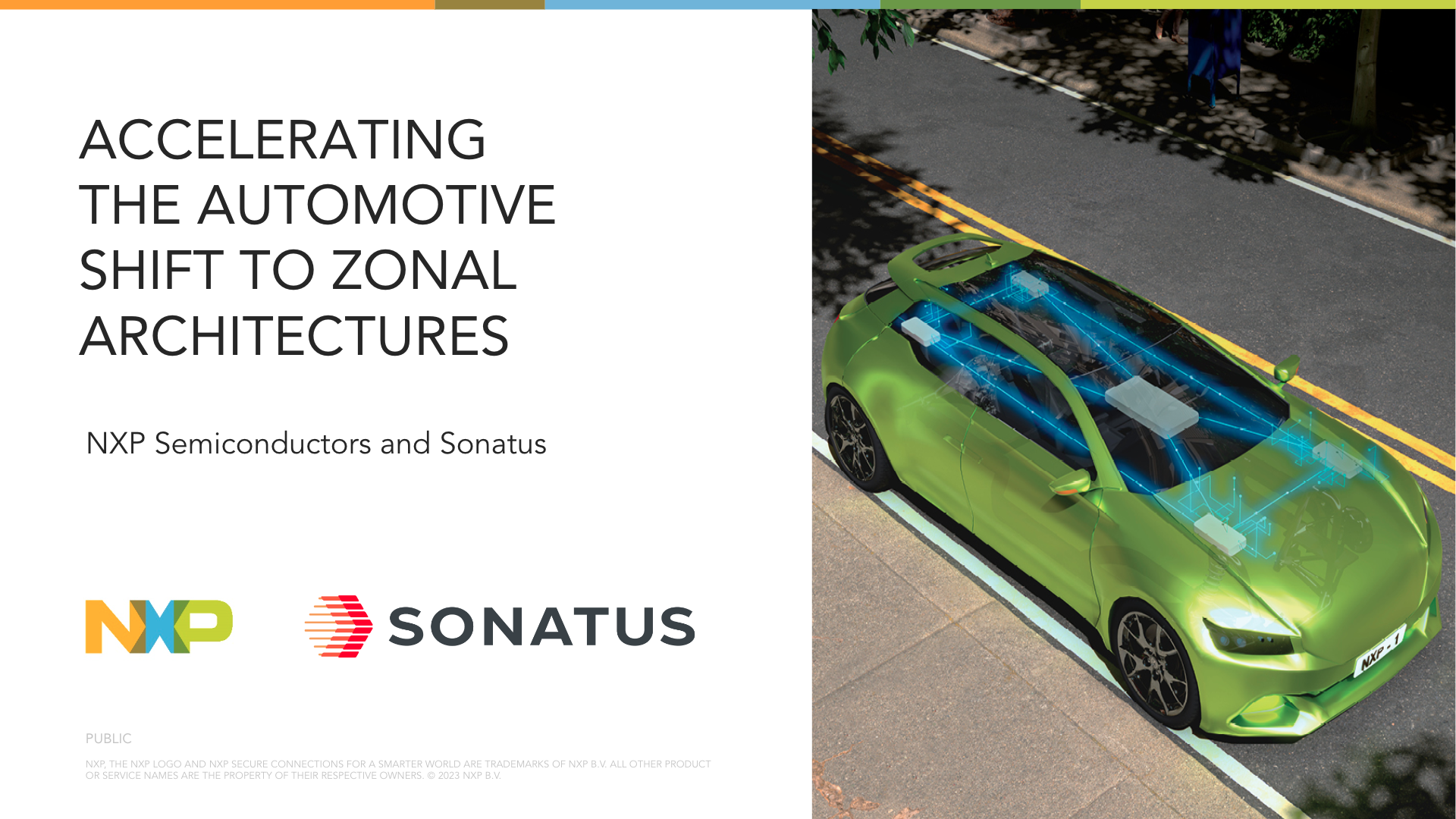
Accelerating the Automotive Shift
to Zonal Architectures
Experts from NXP and Sonatus present a technical foundation of hardware and software to accelerate the shift to future zonal architectures as the foundation of software-defined vehicles.
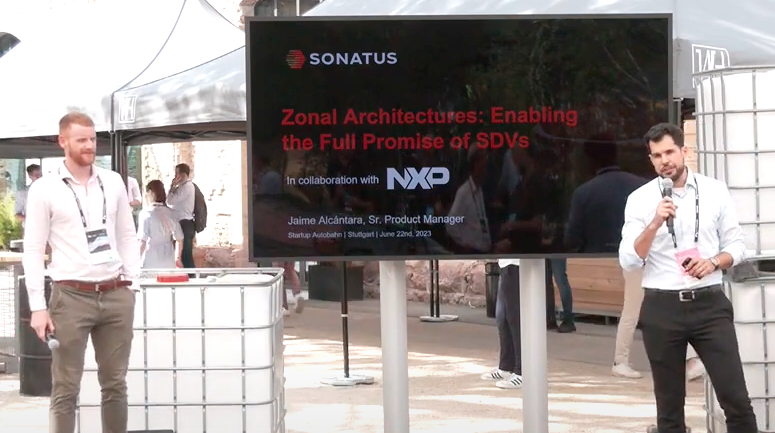
Zonal Architectures:
Enabling the Full Promise of SDVs
Presentation at Startup Autobahn EXPO2023 on insights of Sonatus’s collaboration with NXP on enabling zonal architectures for SDVs.
News | Insights
Sonatus Joins NXP’s S32 CoreRide™ Platform
Building the Brains of SDVs (Part 1)