Introduction to AI Vehicle Diagnostics and AI Technicians
The process of diagnosing and debugging vehicles is a critical area that can benefit greatly from AI-driven optimization. Modern vehicles are more complex than ever, with some containing as many as 1,400 computer chips, so empowering both vehicle engineers during the pre-production phase and automotive repair service technicians post-production can deliver significant benefits to car makers and consumers alike. The use of AI tools in vehicle diagnostics is no longer a futuristic concept but one that can deliver real value to OEMs and their dealers. While vehicle diagnostics has evolved with the integration of AI systems, enabling faster and more accurate identification of vehicle issues, it is still early days.
In this article, we explore how AI models can enable OEMs to create “AI technicians” or “AI vehicle diagnostics” that, alongside human engineers and mechanics, can transform the automotive industry, providing smarter diagnostics, faster turnaround, better automotive service, and higher customer satisfaction. It also promises to unlock predictive maintenance to avoid problems before they happen. AI’s potential in this area is poised to increase rapidly in the coming years.
What are the Limitations of Traditional Diagnostic Approaches?
There are clear limitations to the traditional approach to vehicle diagnostics and debugging. In the past, automotive repair was almost an art, in which a technician’s expertise was paramount. However, modern vehicles have become more complicated, with many interacting electronic control units and increased software, and traditional diagnostics are not always sufficient. The number of technical manuals required to fully understand a modern vehicle, coupled with complex repair records, means athat diagnostic time is longer and more difficult than ever before. The intuition that used to distinguish an expert mechanic is now often wrong or less useful. Automotive service costs have exploded, making the repair process inefficient and often resulting in unnecessary repairs through trial-and-error to explore what is actually wrong and how to correctly fix it.
Traditional diagnostics may be limited in many ways:
- Relying on basic code readers or scan tools that provide a limited analysis of diagnostic trouble codes to research a “check engine light” fault, which can be time-consuming and prone to errors.
- Anecdotal “gut feel” approaches that may replace parts that are not broken, which can increase warranty costs without resolving the problem.
- Reactive maintenance. Traditional methods often focus on reactive maintenance, addressing issues only after they trigger a warning light, rather than on proactive diagnostics.
- Difficulty of training service technicians to handle the complexity of modern vehicles.
Instead, to dive deeper into the complexity of vehicle systems, we need to aim for predictive maintenance and faster car diagnosis, while going beyond a basic fault code analyzer on the on-board diagnostic (OBD) port.
How Does AI Enhance Vehicle Diagnostics and Enable an AI Technician?
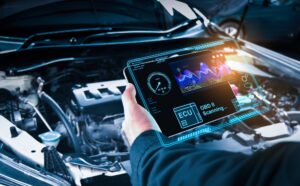
Assisting humans, not replacing them
The limitations of traditional methods have led to the development of artificial intelligence-powered diagnostic tools that can analyze complex vehicle data and provide more accurate diagnoses. Human technicians don’t need to become data scientists to use AI tools effectively, and, in fact, the service centers might elect to not directly expose the AI technician. The reality is that AI systems can do proactive analysis of the situation and provide clear recommendations and diagnostic guidance in everyday language.
Rather than replacing the human, the AI diagnostic assistant can help enhance the expertise of human technicians, giving technicians a powerful tool to improve the repair process and save valuable time. Let’s explore each of these advantages in detail to show how AI can improve diagnosis time and deliver a superior repair process.
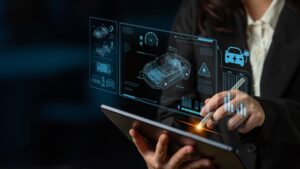
More comprehensive knowledge base
One of the key benefits of AI systems is that they can analyze vehicle data from multiple sources beyond basic error codes, including complex technical manuals, sensor readings, and fleet-wide data, to provide proactive diagnostics and faster root-cause analysis. AI systems can process vast amounts of vehicle data in seconds, recognizing patterns and correlations that would take humans exponentially longer to discern.
AI tools interpret fault codes, or DTCs, and combine them with other data sources to map them to likely root causes, providing technicians with a ranked list of fixes. Thus, AI diagnostics can improve first-time fix rates by providing technicians with the most likely root causes and repair suggestions while simultaneously helping them avoid checking areas of the vehicle that are not problematic.
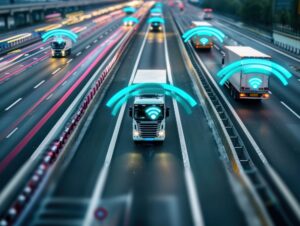
Richer vehicle data and fleet-wide patterns
AI can help technicians diagnose issues more accurately by analyzing historical repair data and vehicle performance, even from other vehicles across the fleet. Unlike repair manuals of the past that were either static or updated infrequently, AI systems can continuously learn and update, adapting to emerging vehicle technologies and refining their models. Connected car platforms have the potential to share data across millions of vehicles, allowing a single car to benefit from the entire global fleet’s learned solutions. As diagnostic patterns are detected in other vehicles, the recommendations can be improved rapidly, and machine learning can ensure that problems fixed in one vehicle can proactively improve the vehicle health of others in advance, before vehicle issues occur or a warning light is activated.
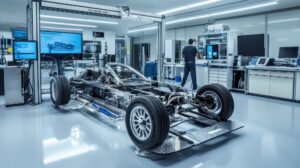
How do AI Technicians Benefit Vehicles Pre-Production?
During the pre-production phase of a vehicle, time-to-market is critical, and development costs are significant. Optimizing those processes and streamlining those resources can be incredibly impactful. In pre-production, vehicle systems are incomplete and not fully debugged. This causes extra complexity for the diagnostic process, because there may be several interacting systems causing problems at the same time.
A typical approach for pre-production vehicle development is to send vehicles to a test track instrumented with storage devices to capture test data for a specific vehicle subsystem or function under test. Later, the data is ingested and processed, and engineers review the results to understand the origins of failures. This process is incredibly data-intensive and requires combining data from multiple sources. In addition, failures from other non-final subsystems not under test may cause a noisy result and may cloud the ability to diagnose the issue being tested.
AI can benefit all of these problems. AI-powered diagnostic tools can analyze complex vehicle data, including sensor readings and diagnostic trouble codes, to provide accurate diagnoses. AI is also very skilled at identifying patterns, including guiding what issues are not the cause of the failure. This reduction in diagnostic time and the avoidance of going down ratholes can be very compelling. Early adopters of these technologies, such as Nissan Technical Centre Europe, are aiming for a 90 percent reduction in system debug time from two weeks to two days.
Pre-production cost-saving from AI technicians
AI technicians can benefit the OEM’s pre-production design cycle in several ways, all of which can result in major cost savings for OEMs:
- Fewer test vehicles. Unlike mass-production vehicles, pre-production test vehicles are as much as 10x more expensive to produce, since they lack the manufacturing automation and economies of scale of mass production. Using AI tools, development engineers can make more effective use of test vehicles and can likely reduce the quantity they need to manufacture.
- Optimized engineer time. Vehicle design and testing engineers are highly skilled, yet today their time is often not used efficiently due to the sheer volume and complexity of the data from test vehicles. AI technicians can save engineers time, making this valuable resource more productive, and probably more pleasant for the engineers as well.
- Faster time to Start of Production (SOP). OEMs are always under pressure to drive new vehicle models to market quickly and to reduce the design duration of new models or new refreshes. AI technicians can help identify and resolve issues more quickly, speeding time to SOP.
How do AI Technicians Benefit Vehicles Post-Production?
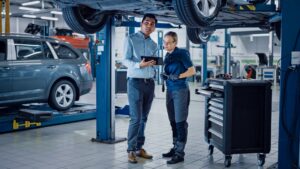
The benefits of AI solutions continue into post-production, enabling reduced vehicle downtime, improved customer satisfaction, and increased efficiency in the repair process. OEMs may choose, for example, to deploy AI as a pre-appointment check to better guide the intake and diagnostic process. AI tools can proactively provide technicians with plain-language explanations of complex issues, enabling them to better communicate with customers and provide more effective repairs. AI diagnostics solutions can be customized to meet the specific needs of individual repair shops and technicians, whether deployed across the shop or specifically to target certain classes of issues.
A growing problem for service centers is the complexity of vehicle software, including intermittent faults, black screens, failed OTA updates, and more. Warranty costs, which for new vehicles are paid by OEMs to dealer service centers, have seen major cost impacts from this growing category of problems. Faced with uncertainty over the problem, technicians may replace hardware units that are not faulty, for example. These “failed” units are costly for the OEM and cause increased repair time and inconvenience for the vehicle owner
Instead, AI diagnostics solutions can improve the efficiency and accuracy of diagnostic processes, reducing vehicle downtime and improving customer satisfaction. Software problems can be detected and remedies recommended without the human technician needing to be an expert. AI-driven diagnostics can also wade through the vehicle data and logs to identify the actual source of problems and avoid sending the human technician down the incorrect path for diagnosis.

Post-production cost-saving from AI technicians
AI technicians can benefit the OEM’s post-production design cycle in several ways, all of which can result in major cost savings for OEMs:
- Reduced repair time. Through AI analysis of vehicle failures, human technicians waste less time seeking the source of the problem.
- Faster resolution time. By continuously improving the diagnostic procedures and better understanding the underlying problem, the problem can be fixed more quickly and is more likely to be corrected the first time.
- Less wasteful hardware replacement. AI can also guide what is not the problem, which can avoid replacing hardware that is not faulty. This reduces warranty costs, repair duration, and improves customer satisfaction.
- Augment human technician expertise. While human expertise remains valuable, AI provides complementary analysis that can look across many systems more easily.
Proactive Maintenance and Predictive Analytics from AI Vehicle Diagnostics
Benefits of AI tools for passenger vehicles
Besides improving pre-production and post-production diagnostics, AI opens the door to superior predictive maintenance. AI diagnostics can better detect potential issues before they occur, enabling proactive maintenance and reducing the risk of unexpected breakdowns before the check engine light appears, reducing vehicle downtime and avoiding more costly repairs. AI-driven diagnostics can detect complex issues, such as brake wear and engine performance problems, before they become major concerns. OEMs may be able to offer value-added services based on real-time data analytics that offer them direct revenue while also improving customer satisfaction.
Benefits of AI diagnostics for commercial vehicles
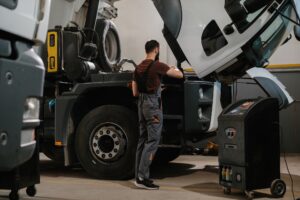
In commercial applications with even more complex maintenance needs, machine learning models can be used to identify patterns and predict potential issues. AI-driven diagnostics can provide valuable insights into vehicle health, enabling fleet operators and commercial operators to optimize their maintenance schedules and reduce costs. In commercial vehicles, where downtime takes valuable revenue-generating machinery out of operation, these tools can easily deliver a significant return on investment. Some operators have increased fleet availability to 93% through the use of AI-driven diagnostics.
Outlook: The Future of Car Diagnostics and AI Technicians
The future of car diagnostics is clearly AI-driven, with the use of machine learning models and artificial intelligence to analyze complex vehicle data and provide proactive diagnostics. The integration of AI into car diagnostics has enabled the development of more efficient and effective diagnostic processes both during design and after production, saving cost, reducing vehicle downtime, and improving customer satisfaction. The future of car diagnostics will be characterized by the increased use of AI-powered diagnostic tools, enabling more accurate and efficient diagnoses.